A practical guide to choosing the right devotional framework for your season, so you can spend less time planning and more time connecting with God.
Finding the right tool for quiet time comes down to understanding how your mind processes reflection and how much time you have available. The friction you feel in devotion isn't spiritual, it is structural. Without a clear container that fits your current season, connecting with God can feel disjointed or overwhelming.
Below is a clear, balanced look at the differences between guided journals and blank notebooks, addressing common questions so you can choose the approach that best supports your daily practice.
1. Guided Journals vs. Blank Journals: Which One Keeps You Consistent?
Blank Journals: A blank notebook offers total creative freedom. It is an ideal space if you enjoy unstructured stream-of-consciousness writing, long-form journaling, drawing, or designing custom bullet-journal layouts. If you thrive on open-ended processing and have time to let your pen wander, a blank journal gives you complete flexibility.
But total freedom frequently leads to decision fatigue. When time is limited, inventing a devotional layout from scratch takes mental energy. You spend valuable minutes deciding how to journal before you even begin connecting with God.
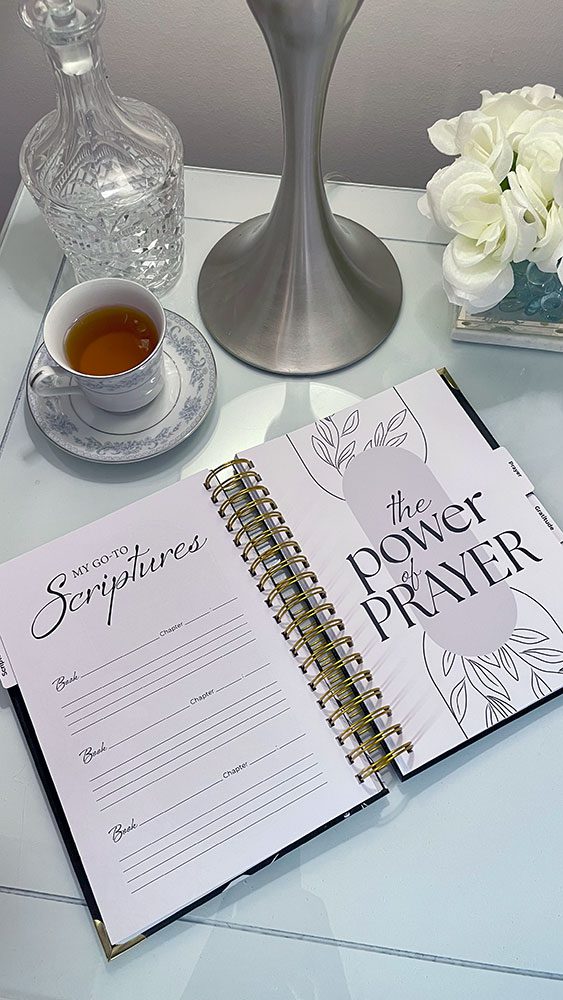
Guided Journals: A guided journal provides a structured framework that eliminates decision fatigue. When morning time is limited, inventing a devotional layout from scratch takes mental energy. A guided format anchors your thoughts with purposeful prompts, leading your mind into intentional reflection without needing to plan the page first. You bypass mental friction, skip decision fatigue, and step directly into prayer. Guided journals provide structure so your faith walk has room to flourish.
The Verdict: If open-ended writing gives you energy, a blank journal is a great fit. If staring at an empty page creates paralysis or eats up your limited quiet time, a guided format provides the structure needed for daily consistency.
2. What Happens If You Miss a Few Days? (Handling Gaps & Seasons)
Let’s release spiritual perfectionism right now. Life happens. Schedules shift, family demands arise, and routines get disrupted. One primary reason people abandon traditional planners and dated devotional books is the wave of guilt when skipping a few days. Pre-printed calendar dates left empty feel like a silent reprimand, causing many to abandon the journal entirely.
Blank Journals: Blank notebooks are naturally undated, meaning you can pause for days or weeks without wasting pre-printed calendar pages. However, after a long gap, opening a completely blank page can feel intimidating because there are no built-in entry points to help you resume your routine.
Guided Journals: Undated guided layouts also prevent page waste, but they offer structured prompts that make jumping back in seamless. You turn to the next page and immediately have a clear path forward without feeling behind.
Prioritizing God in Demanding Seasons: In difficult or hectic seasons, prioritizing time with God becomes more essential, not less. No obstacle or problem you face is ever greater than Him, and He always holds the answer. Challenging seasons are opportunities to reflect on what God is teaching you in real time. Journaling, whether in a blank notebook or a guided framework, serves as a living record of your growth and a physical reminder of your journey to the breakthrough.
3. Time Commitments & Schedule Demands: How Long Does Each Session Take?
Quality of presence always matters far more than quantity of minutes. Ten to fifteen intentional, focused minutes guided by a structured framework will accomplish exponentially more than an hour of unstructured, mind-wandering frustration.
Scripture encourages steady, faithful connection over length. Psalm 5:3 reminds us, "In the morning, Lord, you hear my voice; in the morning I lay my requests before you and wait expectantly."
Blank Journals: Unstructured journaling naturally takes longer because your brain must process where to begin, how to structure the thought, and when to conclude. This makes blank notebooks wonderful for unhurried weekends or extended retreat days, but harder to maintain during a busy weekday morning.
Guided Journals: A guided framework streamlines your session into a focused 10 to 15 minute practice. Direct prompts for gratitude, scripture alignment, and prayer help you engage deeply without losing time to mind-wandering.
4. Will Journaling Feel Like Another Obligation on Your To-Do List?
It is easy to turn spiritual practices into performance metrics, treating quiet time as another chore on a daily to-do list. When quiet time feels like a task, your spirit naturally resists it.
Jesus modeled early morning prayer as a source of strength rather than a rigid requirement. Mark 1:35 notes, "Very early in the morning, while it was still dark, Jesus got up, left the house and went off to a solitary place, where he prayed."
Blank Journals: When using a blank journal, pressure to write long, deep entries can make the process feel like an open-ended essay assignment, turning quiet time into a heavy task.
Guided Journals: Guided prompts break reflection into manageable, intentional steps, keeping your practice light and focused so it never feels like a chore.
Seeking quiet solitude before the demands of the day was His way to realign and connect. A structured journal gives you that same quiet container to lay down mental baggage and receive peace before the world demands your attention.
5. What If You Don't Consider Yourself "Good" at Writing?
A common fear is not feeling eloquent or articulate enough to keep a meaningful faith journal. People worry that sentences sound clumsy, prayers feel repetitive, or thoughts are too scattered to put on paper.
God is not grading grammar, evaluating vocabulary, or measuring paragraph length. Journaling in quiet time is not about publishing a masterpiece, it is about practicing presence. It is about transferring mental noise onto paper to walk through the day with a clear mind and a grounded heart.
Blank Journals: Blank notebooks favor those who naturally process thoughts through writing and feel comfortable articulating their feelings on paper without guidance.
Guided Journals: Guided journals level the playing field for anyone who feels scattered or struggles to find the right words. Journaling is about practicing presence and transferring mental noise onto paper. Guided prompts give you clear entry points so you can write two bullet points or two paragraphs and still experience a meaningful connection.
6. Do You Need Simple Lined Paper or a Guided Faith Journal?
Your faith life is multi-dimensional, encompassing Sunday sermon insights, personal prayer burdens, scripture verses, and daily thanksgiving. A true spiritual tool must be much more than a collection of ruled lines bound in a pretty cover.
Blank Journals: A standard lined journal gives you a clean slate, but keeping different areas of your faith life organized requires extra effort. Sermon notes, prayer requests, scripture takeaways, and daily gratitude end up mixed together across pages unless you build and maintain a personal indexing system.
Guided Systems: A curated devotional system acts as a multi-room sanctuary, offering a designated home for every dimension of your walk with God.
This is precisely why Sunday Soul Notes® was designed as an all-in-one structured journal. Rather than providing basic lined pages, it houses a complete system tailored to keep your reflections organized and accessible:
- 53 Sunday Service Notes with prompts to systematically capture and apply sermon wisdom each week
- 126 Scriptures for the Seasons of Your Soul providing immediate, targeted biblical encouragement whenever life shifts
- Your Favorite Scriptures section designed to store your personal anchor verses for quick reference
- 12 Weeks of Prayers structured to organize specific petitions, intercessions, and records of answered prayers
- 6 Prayer Prompts for Seasons in Life to guide your heart during major transitions and decisions
- 12 Pages of Everyday Gratitude & Gratitude Prompts to intentionally position your mind in praise
- 7 pages for Overflowing Gratitude dedicated to celebrating seasons of abundant blessing
- 2 Love Letters to Yourself designed to honor your resilience, spiritual growth, and personal evolution
- 26 Weekly Meditations offering focused, grounding thoughts for calm midweek reflection
- Free Flowing Thoughts pages providing a designated home for unscripted heart-dumps, brainstorms, and creative inspiration

Less Time Figuring Out What to Write. More Time Connecting.
Quit wrestling with blank pages and scattered sticky notes. Sunday Soul Notes® lays the physical framework so you can skip the setup, release the overwhelm, and step straight into meaningful reflection.
Shop the Journal →
Want to test out a guided layout first?
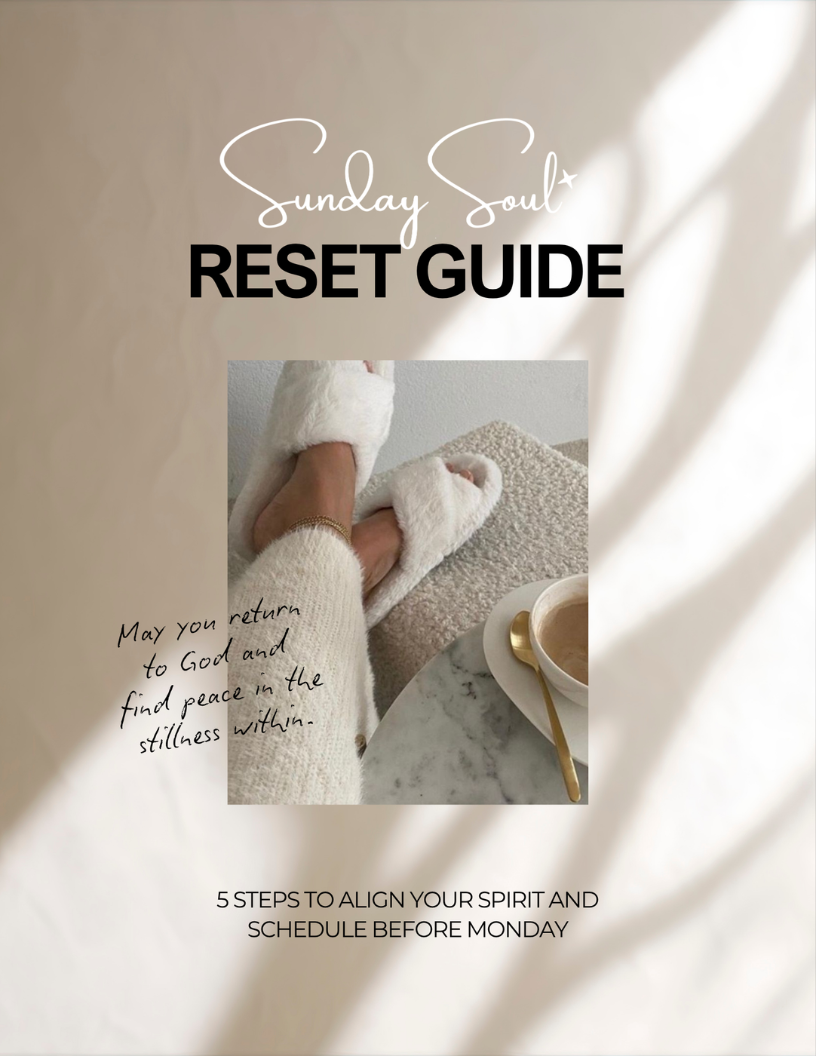
Click here to download our free Sunday Soul Reset Guide: 5 Steps to Align Your Spirit and Schedule Before Monday
to bring peaceful structure back to your morning devotions.


0 Comments