
You wake up with the best intentions on connecting with God.
You pour a warm cup of coffee, clear a spot at the kitchen table, open your Bible, and pull out a blank notebook. You want to feel grounded, rested, and spiritually fed before the demands of the day pull at your attention.
But within minutes, discouragement sets in:
- What should I read today?
- My mind keeps wandering.
- I’m just rewriting the same generic goals.
- I wrote down a few prayer requests, but my thoughts feel completely scattered.
If this sounds familiar, take a deep breath. Experiencing friction during devotions is rarely a sign of a weak faith walk or a lack of spiritual discipline. More often than not, it is simply a lack of structure.
When you sit down without a clear, repeatable framework, your brain spends all its energy trying to figure out how to do quiet time instead of engaging in it.
To build a consistent quiet time routine, you simply need an intentional path that guides your heart from distraction into stillness.
Here is what a truly organized quiet time looks like in practice—and how you can build a practice that feels peaceful, restorative, and sustainable for the long haul.
The Root of Quiet Time Overwhelm: System vs. Struggle
Many Christians carry unspoken guilt around their daily devotions. We tell ourselves that if we were more disciplined, we would read a chapter or more every morning and pray for an hour without getting distracted.
When we don't meat our goal, we abandon the practice altogether, leaving behind half-filled notebooks or journals and a lingering sense of failure.
The secret to moving from spiritual fatigue to daily connection lies in a simple reframe: Structure does not limit your faith walk—it gives it room to flourish.
Just as a trellis supports a vine so it can grow upward and bear fruit, a simple guided quiet time framework protects your morning focus from decision fatigue. When you know exactly where to put your thoughts, your mind can quiet down and focus on what truly matters: connecting with God.
The 4-Step Guided Quiet Time Framework
Whether you have 15 minutes or an hour, following these four clear steps will help you organize your daily devotions and prayer life without feeling rushed or scattered.
THE 4-STEP FRAMEWORK
- PAUSE & PREPARE — Settle the noise and posture your heart.
- MEDITATE & REFLECT — Sit deeply with scripture (quality over speed).
- ANCHOR IN GRATITUDE — Cultivate thanksgiving and daily reflection.
- ALIGN IN PRAYER — Organize requests and pray from the heart.
Step 1: Pause & Prepare (Settling the Noise)
Before opening your Bible or picking up a pen, spend two minutes simply posturing your heart.
We often rush into devotions straight from reading morning news or scrolling social media. Your brain needs a bridge to transition from the noise of the world into stillness.
- Practical Step: Take three deep breaths. Set your phone in another room or turn on "Do Not Disturb." Open with a simple one-sentence prayer: "Lord, quiet my mind, open my heart, and help me hear Your voice today."
Step 2: Scripture & Deep Meditation (Quality Over Speed)
Here is a common misconception that causes unnecessary burnout:
You do not need to read a brand-new scripture passage or entire Bible chapter every single day.
Rushing through a Bible reading plan just to check a box often leaves you remembering very little of what you read ten minutes later.
Scripture explicitly encourages us to meditate on God’s Word (Psalm 1:2, Joshua 1:8). Biblical meditation is about filling your mind with a specific truth and turning it over slowly, like holding a gemstone up to the light to see every angle.
"Sometimes, God's Word requires you to pause and linger. You might spend three days, a week, or an entire season reflecting on just two verses."
If a passage hits home on Tuesday, stay there on Wednesday. Ask yourself:
- What does this tell me about God’s character?
- Is there a promise to lean into or an instruction to follow?
- How can I apply this exact truth to my current season?
Step 3: Anchor in Gratitude & Daily Action
Once you have meditated on truth, transition your heart into thanksgiving. Acknowledging God’s goodness shifts your perspective from scarcity to abundance before you even speak your requests.
Gratitude grounds your quiet time in reality. It reminds you of God's presence in the everyday details and prepares your heart to pray from a place of trust rather than anxiety.
- Practical Step: Write down 1–3 specific things you are grateful for today—not just broad concepts, but concrete moments (e.g., a quiet house this morning, an encouraging message from a friend, fresh energy for work). Pick one truth or verse from your reflection to carry as your spiritual focus for the rest of the day.
Step 4: Intentional Prayer & Heart Alignment
Finally, bring your heart into focused, unhurried conversation with God.
Unorganized prayer time often devolves into repeating a mental laundry list of worries. While God cares about every detail of our lives, unstructured prayer can leave you feeling just as anxious as when you started.
To bring clarity and depth to your prayer life, organize your prayer notes into focused categories:
- Adoration: Praising God for who He is and what He has done.
- Confession: Releasing burdens, mistakes, and unspoken fears into His grace.
- Supplication: Lifting up specific, targeted requests for yourself, your family, and your community.
- Listening: Sitting in silence to yield your thoughts to the Holy Spirit's guidance.
Writing down your prayers keeps your mind anchored and creates a tangible record of God's faithfulness that you can look back on months down the road.
Bringing It Home: A Place for Your Faith Walk
Knowing how to structure your quiet time is step one. Having a dedicated, place to put your reflections into practice is step two.
This is precisely why blank notebooks often fail us. A blank page demands that you invent the structure every single morning. When you are tired, busy, or going through a challenging season, that blank page feels like work.
A guided faith journal eliminates that friction. It offers a gentle, pre-formatted path that holds space for your scripture reflections, gratitude, and prayers without judgment.
Inside Sunday Soul Notes:
If you are looking for a companion to ground your daily devotions, Sunday Soul Notes was created specifically to serve as an all-in-one home for your spiritual journey.
It provides dedicated sections that guide you through every season of your walk with God:
- 53 Sunday Service Notes (With Prompts): Keep your sermon notes organized, key takeaways clear, and application points actionable week after week.
- 126 Scriptures for the Seasons of Your Soul: Curated passages to ground you whether you are in a season of waiting, trial, celebration, or transition.
- Your Favorite Scriptures: A personalized quick-reference section to hold the verses that have anchored your life.
- 12 Weeks of Prayers & 6 Season-of-Life Prayer Prompts: Structured sections to help you track ongoing prayer requests and navigate life’s major shifts with clarity.
- Everyday & Overflowing Gratitude (19 Pages + Prompts): Dedicated pages and guided prompts designed to cultivate a heart anchored in thanksgiving.
- 26 Weekly Meditations: Guided prompts that encourage you to slow down, meditate deeply on God’s Word, and avoid rushing through devotions.
- 2 Love Letters to Yourself & Free Flowing Thoughts: Intentionally designed spaces for honest reflection, personal grace, and processing raw thoughts in God's presence.
Transform Your Quiet Time Routine
Sometimes life doesn't give us a perfect schedule to cultivate a meaningful devotional life. So, aim for a reliable and repeatable routine that brings peace to your morning and depth to your daily faith walk.
By stepping away from unstructured chaos and leaning into a simple guided framework, you can transform your quiet time from a stressful obligation into the most grounding, life-giving part of your day.

SUNDAY SOUL NOTES JOURNAL
Stop staring at blank pages. Experience a structured, guided layout designed to bring peace, organization, and depth to your quiet time.
Shop the Journal →
Prefer to test out a guided layout first?
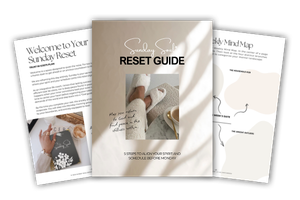
Click here to download our free Sunday Soul Reset Guide: 5 Steps to Align Your Spirit and Schedule Before Monday
to sample the daily framework and organize your devotions starting tomorrow morning.

0 Comments