
How 15 Intentional Minutes Beats 60 Unstructured Minutes Every Single Time
Somewhere along the line, an unwritten rule took root in modern Christian culture: If your quiet time isn't a 60-minute, sunrise session complete with an open study Bible, color-coded highlighters, and two pages of dense notes, it doesn't count.
So, what happens when real life steps in?
When you have early morning meetings, kids asking for breakfast, an endless inbox, or sheer mental exhaustion? You look at your schedule, realize you don't have an uninterrupted hour, and think: "I'll just try again tomorrow."
Days turn into weeks. Half-empty notebooks gather dust on your nightstand. And a subtle, nagging sense of guilt sets in—telling you that you're just not spiritually disciplined enough.
Let's clear the air once and for all: The idea that deep faith requires an hour a day is a total myth.
In Proverbs 21:3, Scripture reminds us: "To do righteousness and justice is more acceptable to the Lord than sacrifice." God has always cared far more about the genuine posture of your heart and your daily obedience than performative religious rituals or rigid sacrifices.
In Hosea 6:6, He echoes this exact heart: "For I desire mercy, not sacrifice, and acknowledgment of God rather than burnt offerings." Forcing yourself into a grueling, one-hour obligation isn't what draws you closer to God—a heart that simply desires daily connection is.
God isn't holding a stopwatch. He isn't measuring your devotion by the tick of a clock or the number of pages you fill. He desires connection, not a performance. And when you trade time-based pressure for intentional structure, 15 focused minutes can completely transform your daily walk with God.
The "All-or-Nothing" Trap of Unstructured Quiet Time
The real reason most people struggle with consistency isn't a lack of love for God—it's the all-or-nothing trap.
When we believe quiet time must be a lengthy, elaborate production, anything less feels like a failure. We convince ourselves that if we can't do it "right," we shouldn't do it at all.
Here is what happens during an unstructured hour versus a structured 15 minutes:
INTENSITY VS. CONSISTENCY
The Unstructured 60-Minute Attempt:
- 20 minutes deciding where to read or what to study
- 15 minutes battling distractions and checking phone notifications
- 15 minutes skimming pages without retention
- 10 minutes of scattered, anxious prayer
- Result: Done twice a month. High friction, high guilt.
The Guided 15-Minute Routine:
- 2 minutes to quiet your mind and posture your heart
- 5 minutes meditating deeply on a single verse or truth
- 3 minutes anchoring your thoughts in daily gratitude
- 5 minutes of focused, written prayer
- Result: Done 5–7 days a week. Zero decision fatigue, lasting depth.
Spiritual growth doesn't come from rare bursts of marathon effort. It comes from small, steady, everyday moments of returning to truth.
Think of it like any meaningful relationship in your life. Imagine someone who reaches out to talk with you for 15 intentional minutes every single day—genuinely checking in, sharing their heart, and listening to yours. You would feel deeply valued, known, and connected. Now compare that to someone who disappears for weeks at a time, only calling once a month out of obligation to talk for an hour. Which relationship feels real, intimate, and enduring? God desires that steady, 15-minute daily connection with you far more than a sporadic monthly marathon.
Why 15 Minutes Works (Depth Over Distance)
If you've ever felt like 15 minutes is "cheating," consider how Jesus taught and interacted with His disciples. He didn't demand exhausting religious tasks; He invited people to come, sit, and receive. He commended the widow who gave two small coins because her heart was fully present.
When you sit down for a 15-minute quiet time routine, you operate under two powerful principles:
1. Elimination of Decision Fatigue
When your time is limited, you can't afford to waste ten minutes wondering where to open your Bible or what to write. Having a guided framework means you sit down and instantly know where your eyes and pen should go. You jump straight into connection.
2. Quality Meditation Over Speed
Reading three chapters in a rush teaches your brain to treat Scripture like a checklist. But meditating on one verse for five minutes allows God's Word to take deep root in your decision-making, mood, and mindset for the day.
"Fifteen minutes of focused presence will always yield more spiritual depth than sixty minutes of distracted compliance."
How to Structure a Meaningful 15-Minute Quiet Time
Here is how simple and grounding your morning devotions can look when you follow an intentional framework:
- Minutes 1–2: Pause & Posture
Close your eyes, take a deep breath, and leave your to-do list at the door. Open with a simple prayer: "Lord, I am here. Quiet my mind and ground my heart in Your presence." - Minutes 3–7: Reflect & Meditate
Open to a single verse, reflection prompt, or curated Scripture. Read it slowly twice. Ask yourself: What does this tell me about who God is right now in my current season? - Minutes 8–10: Ground in Gratitude
Write down 1–3 specific moments of gratitude from the last 24 hours. Acknowledging God's goodness shifts your spirit from worry to trust before you present your requests. - Minutes 11–15: Focused Prayer
Put pen to paper. Write out your prayers—lifting up your family, your worries, and your day. Writing keeps your mind anchored so your thoughts don't drift toward your grocery list.
Built for Real Life: Sunday Soul Notes
If you're ready to ditch the guilt and embrace a quiet time routine that fits your life, you don't need to build a system from scratch.
Sunday Soul Notes was intentionally crafted for anyone who wants depth without overwhelm. It takes the guesswork out of your mornings by giving you a clear, pre-formatted home for your faith walk.
Instead of facing intimidating blank pages, Sunday Soul Notes gives you a guided layout you can move through in 15 minutes or expand when you have extra time:
- 126 Scriptures for the Seasons of Your Soul: Instant, curated Scripture focus so you never waste time wondering what to read.
- 26 Weekly Meditations: Thoughtful prompts that encourage deep reflection over quick skimming.
- 12 Weeks of Structured Prayers & Prompts: Dedicated spaces to organize prayer requests and track answered prayers.
- Everyday & Overflowing Gratitude Sections: Pre-formatted pages to anchor your mind in daily thanksgiving.
- 53 Sunday Service Notes Pages: Keep your weekly sermon takeaways and application points organized in one place.
Give Yourself Permission to Start Small
You don't need a perfect hour. You don't need a silent house. You don't need to have it all figured out before you sit down with God.
All you need is 15 intentional minutes and a willingness to show up as you are. When you step away from the myth of perfection, you'll discover that a consistent, grounded quiet time is closer than you think.

DITCH THE BLANK PAGES & BEING OVERWHELM
Experience the 15-minute guided journal designed to bring peace, consistency, and deep connection to your daily devotions.
Shop the Journal →
Want to test the 15-minute framework this week?
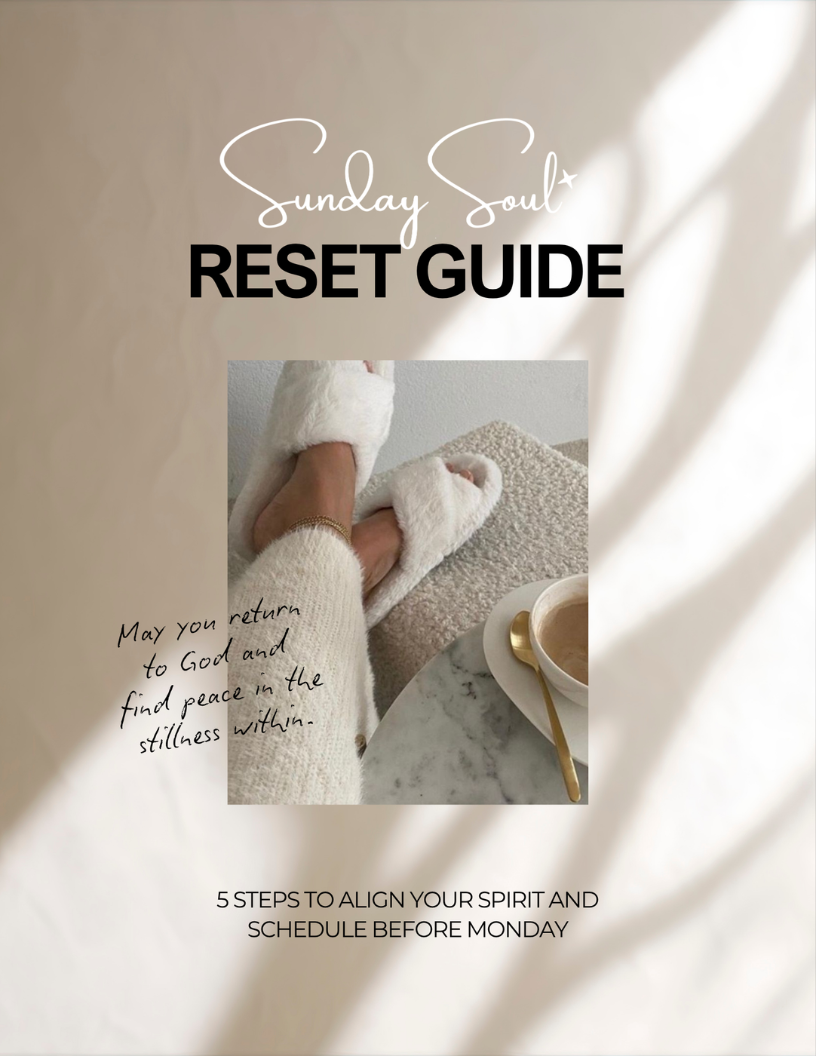
Click here to download our free Sunday Soul Reset Guide: 5 Steps to Align Your Spirit and Schedule Before Monday
and build your new morning habit starting tomorrow.


0 Comments